



By Michael Ovat -Awka
The Anambra State Commissioner for Works and Infrastructure, Arc. Okey Ezeobi, has summoned contractors handling road projects across the state to explain the recurring cases of road failures and take urgent steps to address identified defects.
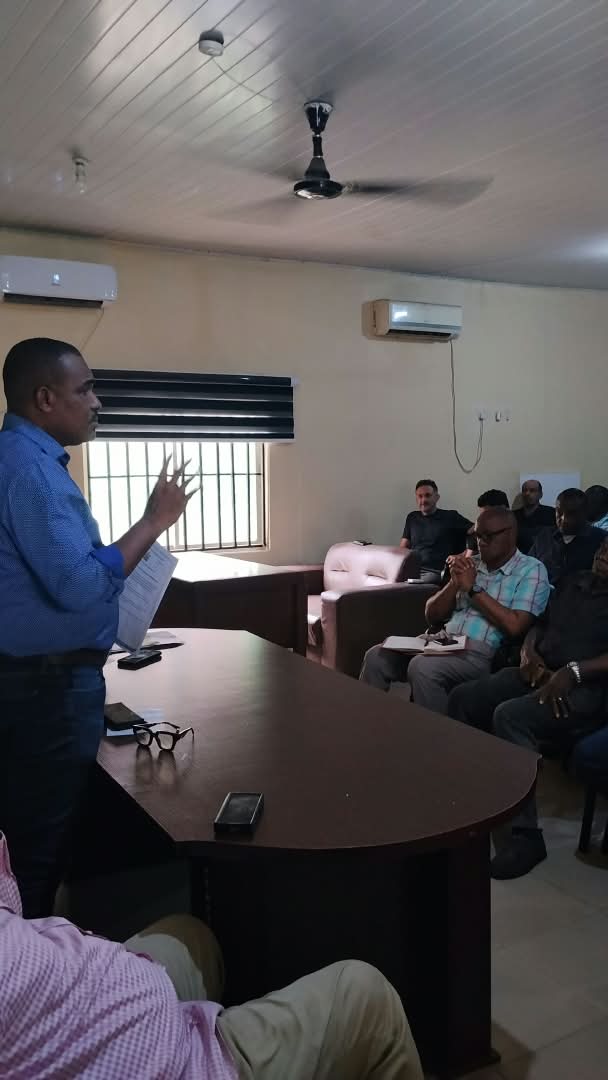
Speaking at a meeting with road contractors, Ezeobi expressed concern over the growing number of videos circulating on social media showing failed road sections, describing the situation as embarrassing to Governor Chukwuma Charles Soludo, the engineering profession and the Ministry of Works and Infrastructure.
He noted that the situation had raised questions about the quality of workmanship and the professional competence of some contractors, particularly in view of the state government’s efforts to improve road durability through the introduction of stone base construction.
According to the Commissioner, the persistence of road failures, especially on dualisation projects, has become a source of concern, despite the engineering measures introduced by the present administration to strengthen road infrastructure.
He explained that the meeting was convened to enable contractors to identify and explain the causes of the failures, while providing an opportunity for the Ministry to determine the necessary corrective measures.
Ezeobi challenged contractors to conduct a comprehensive inventory of all roads constructed since Governor Soludo assumed office, inspect their current condition and promptly repair any sections showing signs of failure.
He stressed that roads must provide motorists with a smooth, safe and seamless driving experience, adding that road users should not have to contend with noticeable defects on newly constructed or rehabilitated roads.
The Commissioner disclosed that he would submit an independent report to the Governor and recommend stricter commitments from contractors to ensure that road projects meet approved engineering standards and do not bring the government into disrepute.
He further stated that the government had fulfilled its financial obligations by paying certificates duly generated for completed work, insisting that contractors must reciprocate by delivering projects that provide value for public funds.
Ezeobi identified poor-quality asphalt, inadequate compaction, insufficient moisture control and the use of untested construction materials as some of the factors that could contribute to road failures.
He directed contractors to ensure that all construction materials undergo the required laboratory tests and receive the necessary certification before being used on site.
According to him, contractors must also carry out the prescribed tests along the entire length of their projects rather than rely on isolated assessments that may not accurately reflect the quality of the work.
He emphasised the importance of strict adherence to established engineering procedures, including proper compaction in layers and compliance with the Ministry’s approval processes.
The Commissioner further directed that contractors must formally notify the Ministry whenever they are ready to undertake compaction, to enable the appropriate inspections and quality-control procedures to be carried out.
He maintained that no contractor should proceed with the use of construction materials before the relevant test results have been obtained and approved.
The Commissioner also expressed concern over the reported failure of some drainage structures, warning that such defects would not be tolerated.
He raised concerns about potential conflicts of interest arising from arrangements in which contractors subcontract drainage construction to their own engineer representatives, stressing the need for independent supervision and accountability in project execution.
Ezeobi warned that where drainage structures are confirmed to have failed, the affected sections would be removed and reconstructed to ensure compliance with the required engineering standards.
He reiterated that proper drainage construction and effective supervision are essential to the durability of road infrastructure, particularly in preventing water-related damage.
As part of the immediate corrective measures, Ezeobi directed the Permanent Secretary of the Ministry to formally write to all contractors, requesting comprehensive lists of roads they have constructed under the Soludo administration.
The contractors are expected to inspect the roads, assess their present condition and urgently undertake repairs wherever defects or failures are identified.
The Commissioner said the directive was intended to ensure that the state government delivers on its commitment to provide durable road infrastructure and value for public expenditure.
He recalled that the government had promised a 20-year guarantee on its roads, stressing that the administration remained committed to ensuring that the public receives the full benefit of its infrastructure investments.
Ezeobi disclosed that approximately 741 kilometres of roads had been asphalted across Anambra State under the current administration.
He noted that many of the roads remained in good condition, explaining that the meeting was prompted by the need to address the cases of failure identified on some projects and prevent a recurrence.
The Commissioner urged contractors to work collaboratively with the Ministry, adhere strictly to approved specifications and uphold the highest standards of professionalism in road construction.
He emphasised that the government would not compromise quality for any reason, adding that every contractor must take responsibility for the durability and integrity of the projects entrusted to them.
Ezeobi reaffirmed the Ministry’s commitment to strengthening quality control, improving supervision and ensuring that road projects across Anambra State meet the standards expected by the government and the people.
In the meeting was the Permanent Secretary of the Ministry, Engr. Dr. Martin Agbili, other Ministry officials
