



By Michael Ovat -Awka
The Nigerian Society of Engineers (NSE), Onitsha branch, has credited President Bola Ahmed Tinubu with the emergency repair of the first niger bridge Onitsha, Anambra State, saying the intervention marks one of the major infrastructure milestone of his administration.
They said the project, alongside other ongoing federal road works across the Southeast, reflected the administration’s commitment to addressing infrastructure gaps and promoting balanced national development.
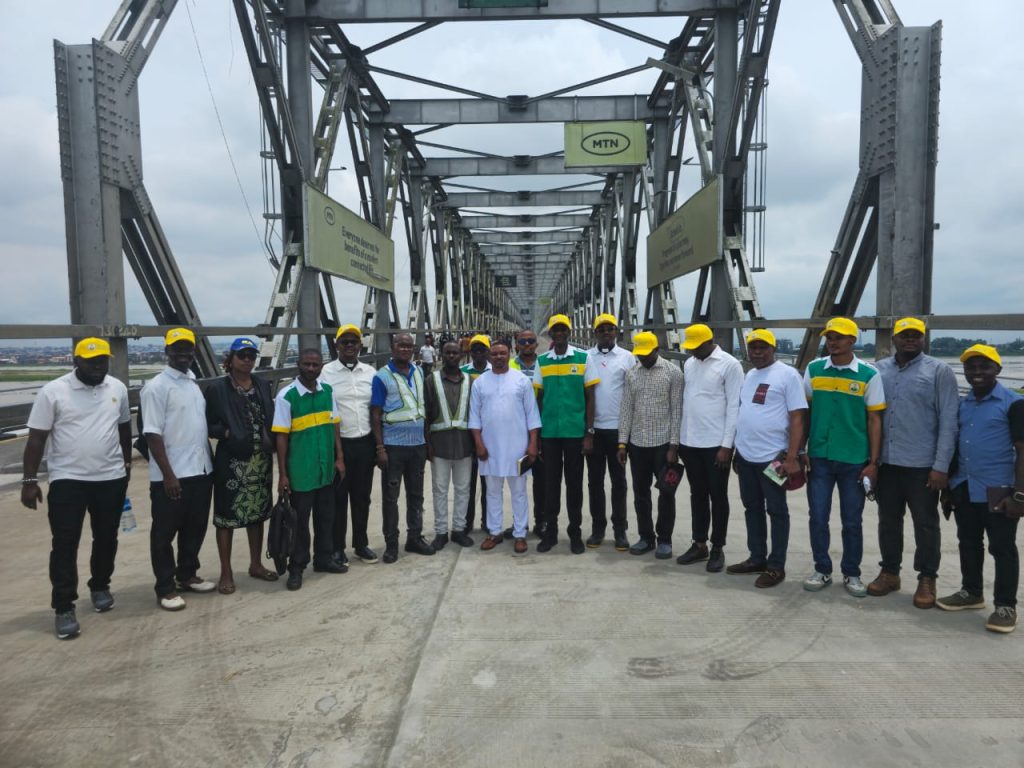
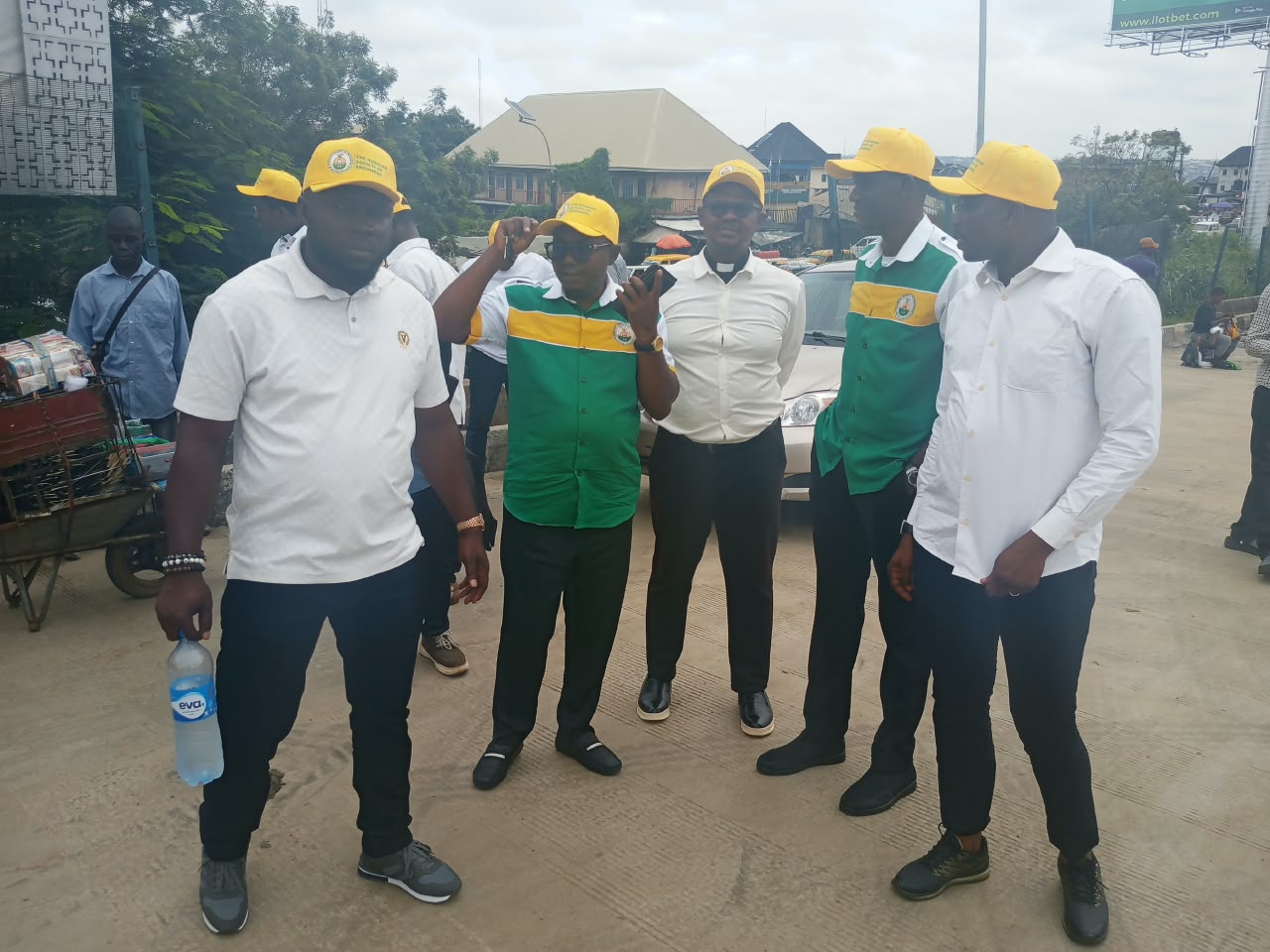
The commendation was contained in a communique jointly signed by the branch chairman, Engr Okey Nwosu and the technical secretary, Rev’d Engr Wisdom Onyemelukwe, and issued to Journalists at the end of it technical inspection tour at the first niger bridge, on Monday, October 5th, 2026.
The Branch appreciates the Honourable Minister of Works, Engr. Dave Umahi, FNSE, for the timely intervention on the First Niger Bridge built in 1964 and commissioned in 1965. This is a welcome development given the strategic importance of the bridge. The quality of work done so far is commendable.
The Branch observed with concern the construction of median barriers on the bridge. The demarcation has reduced the effective carriageway width. This raises concerns about safety, free flow of traffic and additional dead load on the ageing structure.
The branch recommended that the Honourable Minister of Works should consider directing all articulated and heavy-duty vehicles to use the Second Niger Bridge, while the First Niger Bridge is left for light vehicles. This will ease traffic flow, reduce obstruction and preserve the lifespan of the old bridge.
If this is adopted, remedial works should be carried out from Upper Iweka Interchange through Owerri Road to Obosi Interchange to allow smooth movement of heavy vehicles.
“The Anambra and Delta State Governments in collaboration with the Federal Government should establish two fully equipped, 24-hour emergency and safety response centres, one on the Onitsha approach and one on the Asaba approach and each centre should have; “FRSC rescue team on standby, Ambulance with paramedics and first aid equipment, Fire truck and rescue equipment, Security patrol team;
- Direct communication link to hospitals for quick evacuation, Alternative power supply, floodlights and public address system and Incident reporting desk linked to both control rooms.
The aim is to guarantee response to any breakdown, accident, fire or medical emergency on the bridge within 5 to 10 minutes, to prevent secondary accidents and prolonged traffic lock.
There should also be a clear emergency protocol and command chain so that all agencies know their role when an incident occurs.
The branch fully supports the installation of CCTV but emphasizes that it must be effective, not just symbolic.
The branch suggested that the surveillance system should be professionally designed to provide; “Full coverage of the bridge from 1km before entry to 1km after exit, including under-bridge and pedestrian walkways; “High-resolution cameras with night vision, infrared and number plate recognition; Pan-Tilt-Zoom capability to track suspicious movement; Weather-proof and vandal-proof housing; Solar-powered backup with minimum 7 days storage;
- Central monitoring room with trained operators linked to security agencies and to the Second Niger Bridge control centre and Loudspeakers and security lights triggered by intrusion detection.
Beyond cameras, the Branch recommends daily physical patrols, regular structural inspection, effective street lighting on the bridge, fencing of vulnerable access points, community engagement to report scavengers, and swift arrest and prosecution of vandals.
In it conclusion, the branch noted that the Honourable Minister has rightly opined that police and security checkpoints should not be close to the bridge to avoid traffic build-up.
The Branch further recommends that revenue agents, whether Federal, State or Local Government, should not operate within 1km to the entrance and 1km after the exit of the bridge.
The Branch commends the Federal Government and the Federal Ministry of Works for the rehabilitation work.
The First Niger Bridge is a critical national asset. The physical rehabilitation should be complemented with measures for preservation, traffic management, prompt emergency response and effective surveillance against vandalism.
“We will continue to offer professional contributions to ensure the bridge remains safe, functional and fit for purpose, Onitsha NSE branch concluded.
Receiving the NSE team, the Federal Controller of Works, Anambra State, Engr. Timothy Emenike, briefed the team on the scope of works to include:
” Rigid pavement works some meters at the entry and exit points of the bridge, and flexible pavement works along the bridge carriageway;
“Repairs of steel structures following vandalization of nuts, bolts, and other members by iron scavengers;
“Treatment of corroded sections of the bridge;.
“Introduction of median barriers along the carriageway;
” Creation of emergency lay-bys at intervals for broken-down vehicles; and
“Deployment of towing trucks at both the entry and exit points for prompt evacuation of disabled vehicles.
[10/6, 6:13 PM] ovatmichael82: NSE tours First Niger Bridge Onitsha, lauds Federal Ministry of Works over rehabilitation work, makes technical recommendations .
