



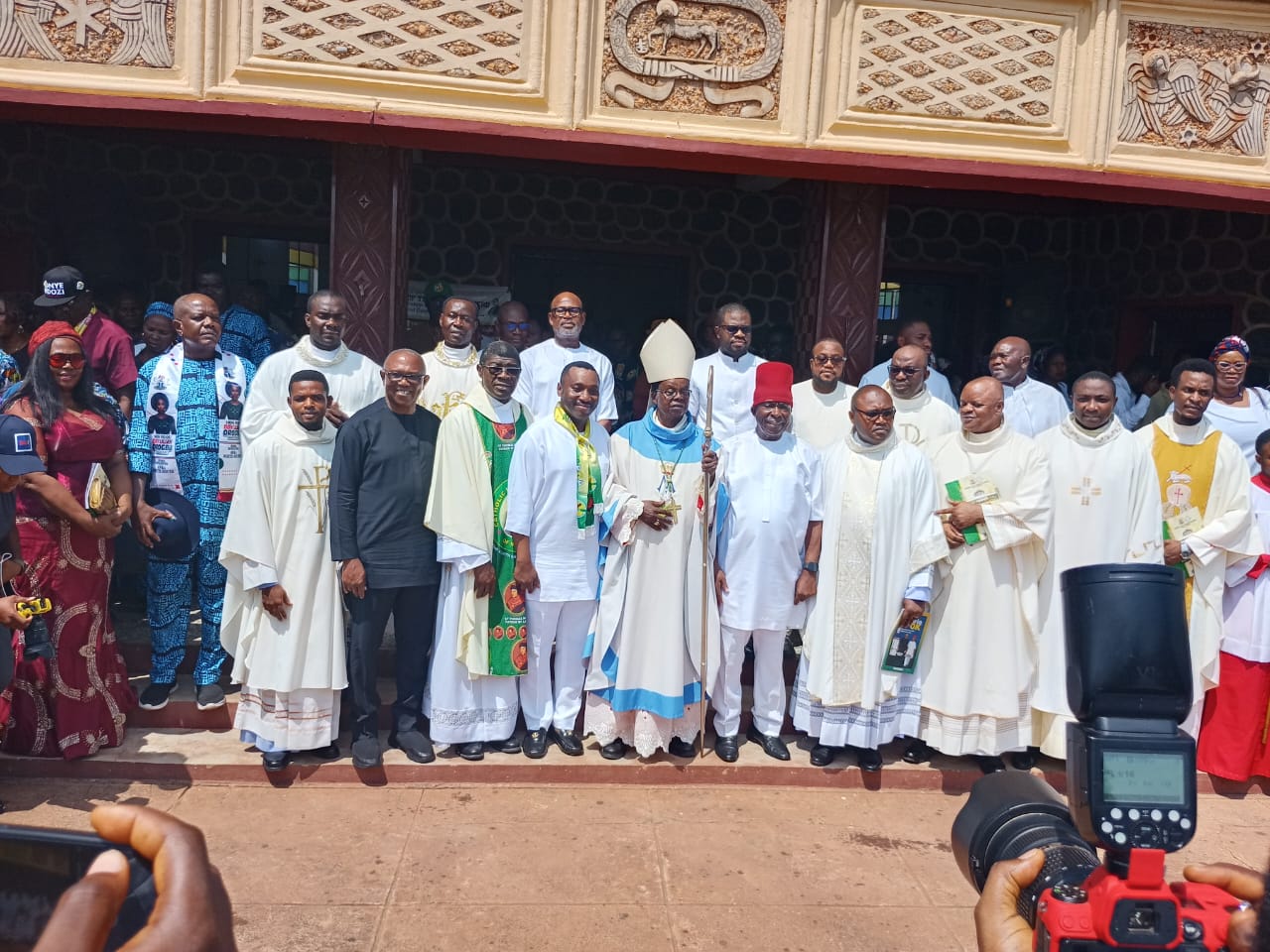
By Michael Ovat- Awka
The President, Laity Council of Nigeria, Awka Diocese, Hon. Engr Sir Victor Meju, Esq FNSE, has appeal to Catholic faithful contesting the 2027 general election, particularly, Senator Victor Umeh of the Nigeria Democratic Congress (NDC) and Rt Hon Fedinard Dozie Nwankwo of the All Progressive Grand Alliance (APGA) and others struggling the Anambra Central Senatorial seat not to allow the race destroyed their Christian fellowship.
Meju appealed was contained in his welcome address presented during this year 2026 Annual Seminar/Award organized by the Laity Council, held at Archbishop A.K Obiefuna Retreat/Pastoral and Conference Centre Okpuno in Awka South Local Government Area of the State, on Saturday, November 21st, 2026.
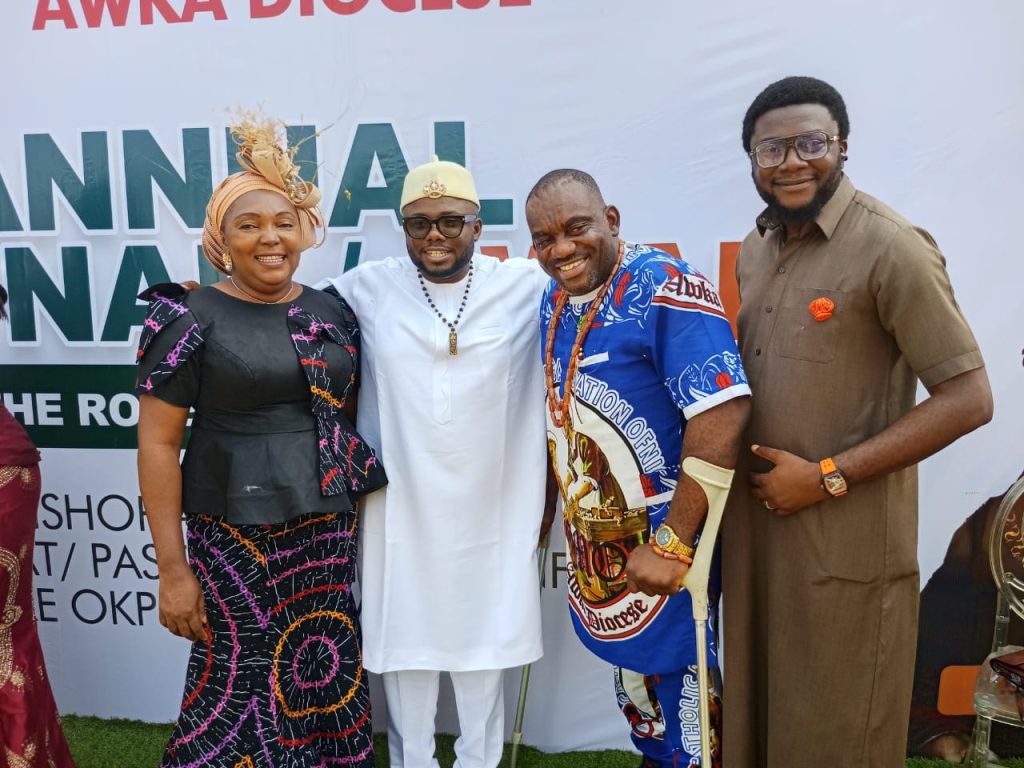
The Seminar described as first of it kind by the Council leadership was well attended by delegates from deanaries and parishes in Awka diocese, candidates from various political parties vying for various offices at federal and state levels as well as the Presidential candidate of the Nigeria Democratic Congress NDC and former governor of Anambra State, Mr Peter Obi.
The address read in part; “It is with immense joy, profound gratitude to God, and a deep sense of responsibility that I welcome you to this year’s Catholic Laity Annual Retreat and Leadership Seminar.
“Today is not merely another date on our diocesan calendar. It is a deliberate moment of spiritual renewal, leadership reflection, intellectual engagement, and a renewed commitment to the mission entrusted to us as the lay faithful of the Catholic Church.
“Our gathering today calls us to reflect seriously on our critical role in both the Church and the wider society. The Second Vatican Council, particularly in its dogmatic constitution Lumen Gentium, reminds us of the dignity and responsibility of the lay faithful. We are not merely spectators in the vineyard of the Lord. We are active participants, called to bring the light of Christ into our families, workplaces, marketplaces, schools, public institutions, and the corridors of political and economic power.
“Through our diverse secular vocations—as teachers, engineers, lawyers, medical professionals, civil servants, business people, farmers, artisans, politicians, parents, students, and community leaders—God has given us the unique opportunity to influence society positively. Our core responsibility does not end at the church entrance; it continues wherever human beings live, work, and exercise authority. The Church needs a laity that is spiritually grounded, intellectually equipped, morally upright, socially conscious, and courageous.
“Therefore, we must ask ourselves: What impact are we making? How do we respond to corruption, injustice, poverty, and the growing loss of moral values? Are we using our talents to serve humanity, or are we allowing personal interests to overshadow our Christian responsibilities?
“Distinguished ladies and gentlemen, leadership in the Church and society is not a privilege to be exploited; it is a responsibility to be discharged with humility, integrity, and accountability.
“Our Lord Jesus Christ gave us the perfect example when He declared that He came not to be served, but to serve. Whether we hold positions in parish councils, diocesan organizations, professional associations, or public offices, our leadership must reflect the values of the Gospel.
“We must reject the temptation to pursue leadership for personal recognition or material gain. Instead, we must use it to uplift the weak, defend the vulnerable, and promote the common good.
“I particularly charge our parish and zonal leaders: embrace transparency, accountability, consultation, and unity. Build structures that nurture new leaders and ensure every member’s gift is utilized. Furthermore, our youths must not be left behind. You are not merely leaders of tomorrow; you are partners in the mission of the Church today.
“We must mentor you, listen to your concerns, and equip you with relevant skills.
“This brings us to the central theme of our seminar: “The Role of Laity in Politics.
“I wish to emphasize that politics, when practiced with integrity and directed towards the common good, is a legitimate and vital avenue for Christian service. Consequently, the Catholic laity cannot afford to remain indifferent to the political process. Our faith must inspire us to participate responsibly, make informed choices, and demand accountability. We must encourage competent, credible, and morally upright individuals to serve in public office.
“However, our political participation must never be reduced to partisan loyalty, ethnic sentiment, personal patronage, or the pursuit of immediate benefits.
“Our ultimate loyalty must remain to truth, justice, human dignity, and the common good.
“We must be prepared to support what is right, challenge what is wrong, and hold ourselves accountable to the standards we profess.
“Let us also remember that political differences must not destroy our Christian fellowship. We may belong to different parties or hold different opinions, but we remain brothers and sisters in Christ. We must engage one another with respect, absolutely reject hate speech and violence, and promote peaceful democratic participation.
“I urge every member to become an agent of positive change: register and vote, study public policies, and engage constructively with our elected representatives.
“My dear brothers and sisters, the journey of Christian leadership is not always easy. There will be disappointments, criticisms, and moments when our efforts seem fruitless. But Saint Paul admonishes us in 1 Corinthians 15:58 to be *“steadfast, immovable, always abounding in the work of the Lord, knowing that your labour in the Lord is not in vain.”
“Let these words strengthen our resolve. Do not become discouraged if your service is unrecognized. Do not abandon the truth because it is unpopular. Do not surrender your Christian principles for temporary political or material benefits. Do not allow internal disagreements to weaken our unity.
“Instead, let us remain committed to prayer, study, service, and mutual respect. Our spiritual life must sustain our public witness. We cannot effectively proclaim Christ if we neglect prayer, the sacraments, the teachings of the Church, and the discipline of Christian living. The world is watching us. Our families, our young people, and our political leaders must see in us a credible example of Christian integrity. Let our conduct speak louder than our titles, and let our service speak louder than our promises, Meju admonished further.
He sincerely appreciate the Bishop of Awka Diocese, Most Rev. Paulinus Chukwuemeka Ezeokafor, for his continue support to the grow and development of the Laity Council.
In a lecture, a guest lecturer and Executive Director, Finance and Administration of the Nigeria Maritime Administration and Safety Agency, NIMASA, Chudi Offordile, Esq, dwelt on the theme of the event “The Role Of Laity In Politics” and said that the laity seems to be the active civil society in politics as they have shown political consciousness and civic engagement geared towards getting it right, urging them not to relent until the goal is achieved.
He said that human settlement development and management should be paramount in the minds of leaders, regretting that several decades of lack of planning has subjected the society to many lacks without solutions and maintained that emphasis should be laid on the vision 2070 plan envisioned by former Governor Willie Obiano, commending Governor Chukwuma Soludo for his plans towards Awka 2.0, which he described as a deliberate act to provide necessary infrastructural and industrial opportunities for development.
Earlier, the Chairman on the occasion, Professor Kingsley Ugorji, advised the laity not to see money as the criteria to vote rather, to vote their conscience because according to him, it will be to their detriment to collect little amount of money or gift and sell their future for four years, urging them to vote credible candidates to represent them.
