



By Michael Ovat -Awka
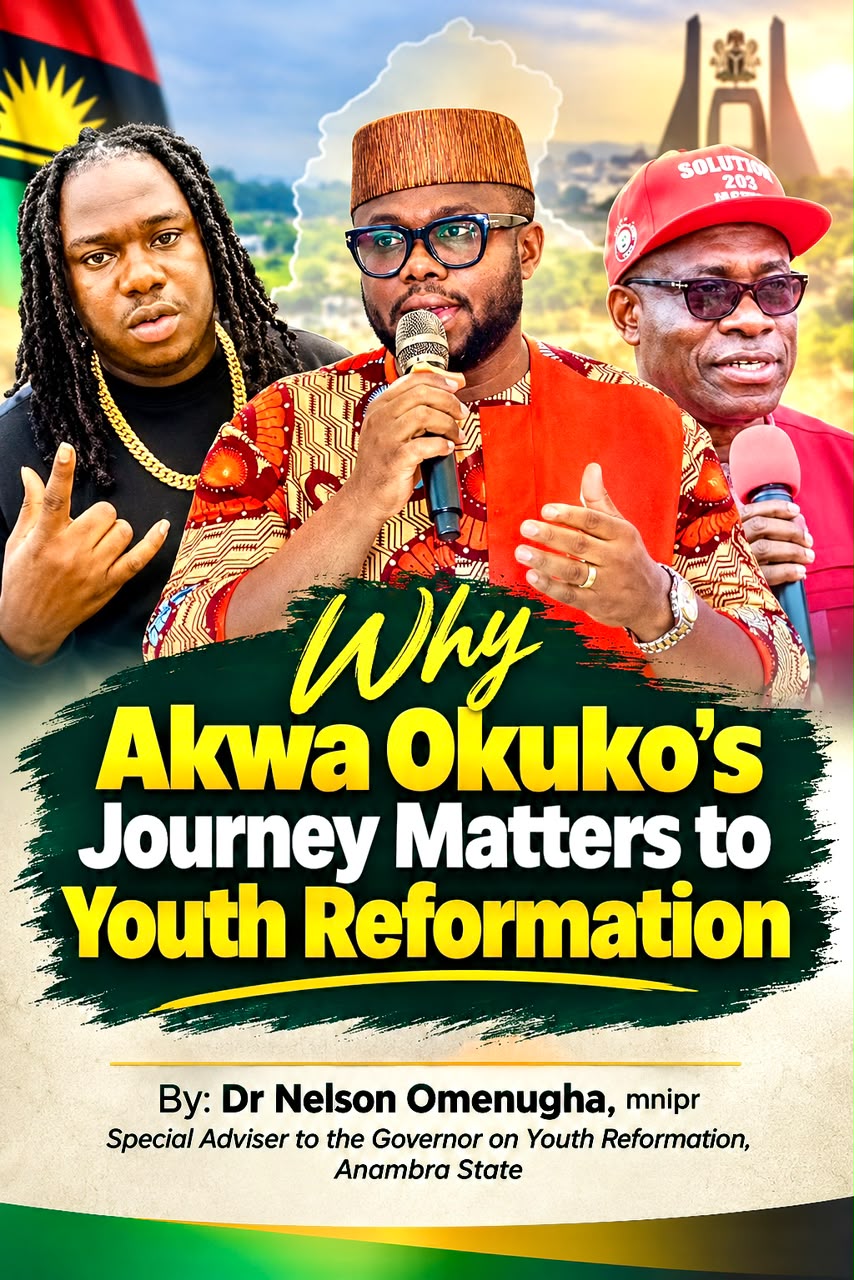
The Special Adviser to governor Chukwuma Charles Soludo of Anambra State, on Youth Reformation, Dr Nelson Obinna Omenugha, has explained why the popular native doctor, Chidozie Nwangwu, widely known as Akwa Okuko Tiwara Aki, was granted remission from the Nigerian Correctional Centre, Amawbia by the governor.
Omenugha said the freedom comes with the condition that Nwangwu transition into a new role as an Ambassador for Youth Reformation would channel his influence toward value reorientation and discouraging practices associated with unwholesome quick-wealth tendencies among the youth.
Recall that Nwangwu, who was previously remanded and subsequently sentenced following a court verdict over charges related to the promotion of quick wealth and fetish practices, regained his freedom after Governor Soludo exercised his prerogative of mercy.
During a visit to the Nigeria Correctional Centre, Amawbia, the Governor announced the immediate clearance for his discharge by signing the necessary papers on the spot, sealing his immediate release from custody.
Reacting further on the development via statement in Awka, on Tuesday, Dr Omenugha lamented that, the decision by Mr Governor, Prof. Charles Chukwuma Soludo, CFR, to grant remission to Nwangwu, and bring him into the State Youth Reformation project as an Ambassador has understandably generated public debate.
He said “Those concerns deserve to be heard. But so too must the philosophy of our Youth Reformation be understood.
According to him, “Our Youth Reformation, as envisioned by Mr Governor, is not simply about punishing those who have gone wrong. It is about preventing young people from going wrong, correcting those who have gone wrong, and giving those who genuinely turn around an opportunity to contribute positively to the State.
“That is the philosophy behind the intervention.
“Akwa Okuko did not become an Ambassador because his past conduct is being celebrated. He became relevant to the reformation conversation precisely because his story carries a powerful warning about the dangers of quick wealth, destructive practices and misplaced values.
“He has experienced the consequences of that path. He faced the law. He was convicted. His shrine was demolished. He was required to renounce the practices associated with his conviction and participate in youth reorientation.
“Governor Soludo’s remission does not erase that history. Mercy is not acquittal. Forgiveness is not endorsement. Rehabilitation is not celebration of the past. Rather, the Governor’s action creates an opportunity to turn a difficult personal history into a public lesson.
“During the Governor’s September 18 visit to the Amawbia Correctional Centre, he spoke about incarceration as an opportunity to become a better human being. The remission is therefore situated within a broader philosophy of correction, restoration and reintegration.
WHY AKWA OKUKO?
“This is at the heart of the criticism, and the answer is straightforward: young people need to hear not only from those who got everything right, but also from those who have experienced the consequences of getting things wrong.
“For Akwa Okuko, who once stood close to a culture of quick wealth, his story can become a compelling teaching to young people: there is no shortcut to a meaningful and sustainable life. That is the logic of reformation.
His role as Ambassador should therefore not be understood as a reward for past conduct, but as a responsibility attached to the second chance being offered to him. We all deserve a second chance in life; what matters is what we do with it.
“For years, unexplained wealth and the appearance of sudden success have fascinated some of our young people.
“Our Youth Reformation seek to change that culture by promoting honest work, enterprise, character, skills and sustainable success.
“We want the young Onye Anambra to understand that wealth without values is not success; influence without character is not leadership; and money obtained through destructive or unlawful means is not achievement.
“Akwa Okuko’s participation can help make this message tangible. His story can become a living testimony to the consequences of the very shortcuts our Youth Reformation seeks to discourage.
“Let me be clear: Akwa Okuko’s remission does not glorify his past. Oke-Ite, unlawful practices and criminality are not being promoted or romanticised.
His Ambassadorship is about renunciation, responsibility, lawful enterprise, character, skills, legitimate wealth creation and positive youth influence.
“Will Akwa Okuko consistently reject the practices that led to his correctional custody? Will he use his influence to discourage quick wealth through destructive or unlawful means? Will he promote skills, enterprise, hard work, lawful wealth creation and personal responsibility?
“These are the questions that matter. And so far, he has begun to provide affirmative answers. His message to the youths of his community, Oba, is worth listening to.
“That is the heart of Youth Reformation: not merely to condemn a fallen person, but to demand accountability, insist on change and create room for a New Onye Anambra.
“Akwa Okuko’s journey towards becoming a New Onye Anambra has begun. We must give him the chance to prove that a fall need not be a final destination, the SA concluded.
